Kimonos should be professionally dry-cleaned, avoiding washing machines and dryers. Keep them away from moisture, light, insects, and dust, and store them properly folded and dry in a well-ventilated, dry place. Cotton or washable materials can be gently hand-washed according to the instructions. After washing, hang them in a cool, dry place, avoiding direct sunlight and excessive wringing to extend the life of the kimono.
[Cleaning]
- Professional Handling: Formal kimonos made of delicate materials such as silk and wool should be sent to a professional dry cleaner to ensure the fabric and quality are not damaged. [Currently, there is only one kimono cleaning service in Hong Kong.]
- Handwashing at Home:
- When washing cotton yukata or silk materials labeled washable, some of the dye may come off. To prevent the color from fading, always wash the yukata separately.
- Generally, the more alkaline the pH, the faster the color will fade. If using detergent, always use a neutral detergent.
- Using less water during washing will darken the dye, increasing the likelihood of color transfer. Furthermore, warmer water will make the dye more likely to flow. Wash with plenty of cold water.
- To spin dry, place the yukata on a large towel, then wrap it between the towels and roll it up. Do not rub or twist it.
- When drying, it's best to run the sleeves over the clothesline and keep them taut.
- If you can't hang the yukata high to dry, hang it horizontally on the back of the yukata.
- The trick is to iron it when it's half dry.
- Post-Washing: After hand washing, gently tumble dry the kimono. Let it air dry in a cool, well-ventilated place, avoiding direct sunlight to prevent fading or fiber damage.
[Storage]
- Proper Folding: Fold the kimono along the seams to avoid unsightly creases. Wrap it in washi paper or cotton cloth afterward. [For details, please refer to the online tutorial]
- Moisture and Insect Repellent: Store the wrapped kimono in a dry, dark, well-ventilated space, such as a traditional wooden tansu (a traditional tsukuri). Apply moisture and insect repellent.
- Separate Storage: Store accessories such as the obi (belt) separately to avoid compression and deformation from the kimono.
[Precautions]
- Damage Prevention: Never wash or dry your kimono or use strong detergents or color enhancers on it.
- Regular Inspection: Inspect your kimono regularly to detect stains and damage early.
- Keep away from chemicals: Avoid contact with strong chemicals such as perfume and cosmetics to prevent damage to the fabric and color.
[Product Condition]
- New / Brand new and have not been used.
- Rank S / Close to brand-new state, with minor scratches. Overall in good condition.
- Rank A / Some scratches and stains. Appear to have been used.
- Rank B / Major scratches and stains. Obvious to have been used.
- Rank C / Serious scratches and stains. Great traces of use.
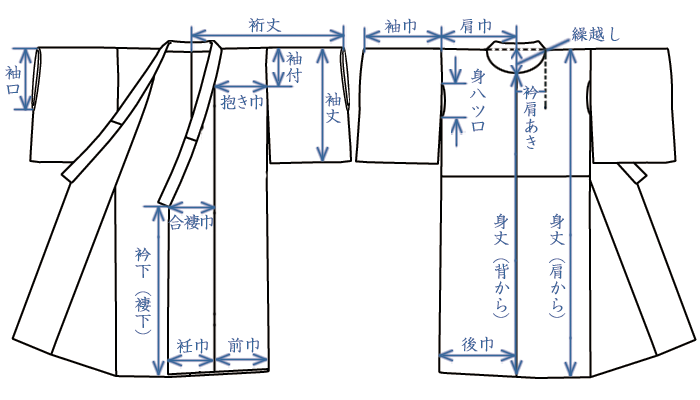
[Kimono Sizing]
- Sleeve Length (裄丈): From center back seam to cuff
- Body Length (身丈): Total length from center back seam (excluding collar)
- Shoulder Length (肩巾/肩幅): From center back seam to sleeve seam
- Sleeve Length (袖巾): From sleeve seam to cuff
- Front Length (前巾): From front seam to side seam
- Back Length (後巾): From center back seam to side seam
- Sleeve Length (袖丈): Sleeve Length